

A Passage to India
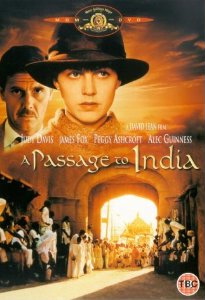 Do novelists and poets change the world or do simply please and entertain us? I suspect that the best novelists sense the early signs of a new mood and outlook. If truly gifted, they are able to put in words and stories such a new outlook, infect the rest of us with it, and thereby pave the way for sometimes dramatic social changes. In his novel A Passage to India, E. M. Forster exposes the hypocrisy the British engaged in while in ruling India. While thinking of themselves as the most civilized people on earth, they treated Indians as subhuman. British rule was already questioned in 1924 when Forster’s novel was published. Yet it took another 23 years until Indian independence. Watching the film version of the novel, it seems to me that British readers of Forster’s novel would have been infected with the sense that British rule is unjust. The first 60 minutes of the film are slow and I was about stop watching. But then the drama picks up and the next 90 minutes are wonderful.
The Apostate: Paul Haggis vs. the Church of Scientology
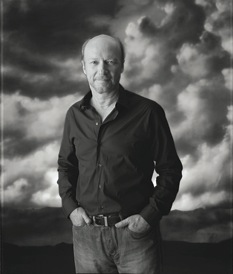 Lawrence Wright spent over a year assembling evidence that makes it quite clear that Scientology is a cult rather than a religion. At the center of the story is, Paul Haggis, one of Hollywood’s most creative writers and producers, who spent 35 years climbing up the ladders of scientology. Haggis is the proverbial “smoking gun.” In the end, Haggis loyalty to his gay daughter proved stronger than the brainwashing of Scientology. He quit Scientology and is now battling the “church” with all that he has got. I cancelled my evening plans to be able to read this article from beginning to end in one sitting. Read the fascinating story in the New Yorker. It is the New Yorker at its very best. You don’t want to miss this report about how Scientology to date recruited and retained so successfully Hollywood celebrities. I am quite sure more federal law enforcement agencies will look more vigorously into the practices of Scientology after this expose.
My Fair Lady
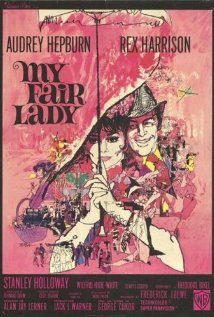 George Cukor, the director of this extraordinarily fun film, admitted: Give me a good script, and I’ll be a hundred times better as a director. My Fair Lady is based on the play Pygmalion: A Romance in Five Acts by the Irish writer George Bernard Shaw. The writer won the Nobel Prize in literature (1925) and later an Oscar for the film version of Pygmalion (1938). Shaw, who was also the co-founder of the London School of Economics, delivered to Cukor great material about a low class girl (Eliza Doolittle) and a professor (Higgins) who takes a wager that he can turn the impulsive, crude, uneducated flower girl into a lady. The professor’s goal is to use his scientific expertise in how people learn to speak language properly to teach Eliza and pass her off as an aristocrat at the Queen’s ball six months later.
Everything about the film is perfect. It represents Hollywood at its best. I don’t see how the remake of the film planned for 2012 can top the 1964 production.
18 Days of Eqypt: NY Time Photo Diary of the Remarkable Events

Click on photo to start the gallery.
The AP reports on Mubarak’s final hours: Desperate bids to stay
Continue ReadingMadame Bovary
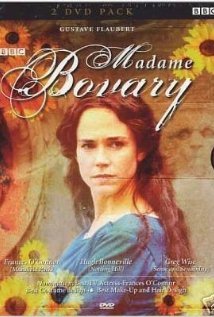 Madame Bovary is a masterpiece. I mean both the BBC film adaptation of Flaubert’s famous novel as well as the story itself. First a few words about the film and then about the story. Especially in the first half, the director moves us quickly through the life of Emma Bovary. The 19th century setting is beautifully staged. Gustave Flaubert’s 1856 book, regarded by many as of the ten best novels ever written, operates on many levels. It is so rich that right after watching the film I am tempted to read the book itself to see how Flaubert communicated the psychological drama with words alone. On one level, Flaubert demolishes the idea so central in Western culture over the past centuries, namely, that romantic love of one other human being and the feelings it creates in our hearts is the only road to happiness. In her quest to feel the excitement of romantic feelings that she believes are required for meaning and happiness, Emma Bovary dedicates her entire life to escaping what she regards a boring relationship.
Democracy Watch: In the Middle of the Struggle in Egypt
 NICHOLAS D. KRISTOF files this dramatic report from Cairo for the NY Times.
Watching Thugs With Razors and Clubs at Tahrir Sq. Pro-government thugs at Tahrir Square used clubs, machetes, swords and straight razors on Wednesday to try to crush Egypt’s democracy movement, but, for me, the most memorable moment of a sickening day was one of inspiration: watching two women stand up to a mob.
Continue Reading

Barney Frank: Clinton Is ‘Cool Kid’ at Davos
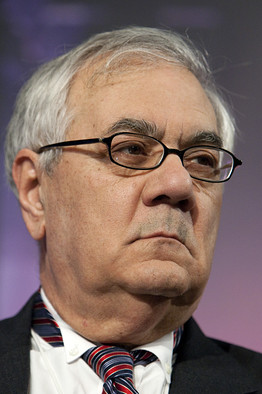 I like Barney Frank more and more. When he retires, he can perhaps tour the country as a stand-up comedian. Here is his most recent humorous press interview courtesy of the WSJ.
Barney Frank, the witty Democratic congressman from Massachusetts, held forth on a number of topics during an impromptu question-and-answer session with reporters Saturday morning at Davos. Among the more random questions put to the long-serving congressman: Can Bill Clinton—whose Thursday evening talk was one of the conference’s best-attended events—be considered the “Mayor of Davos”? “No,” Mr. Frank replied. “I don’t know what that means.“Instead: “He is the most popular kid in Davos High School.”“He may even go beyond Bono ... He’s got that rock star plus the politico thing.” Mr. Frank was dressed something like a rock star himself, wearing a paisley tie that was wrapped almost completely around the outside of his collar. He had just emerged from a meeting of the world’s leading economic officials, including European Central Bank President Jean-Claude Trichet. Reporters asked him whether Mr. Trichet had expressed worries about inflation. No, he said. They asked again; that began to annoy Mr. Frank. “I am terribly sorry. Look, I understand not giving bad news to journalists is like not giving candy to children. But I apologize I have no bad news to give you.” One reporter would not be dissuaded: There was no discussion of inflation? “That’s the third time you’ve asked me, and you would obviously like me to say there was inflation, and I can’t make it up!”
Continue ReadingA Widow’s Story
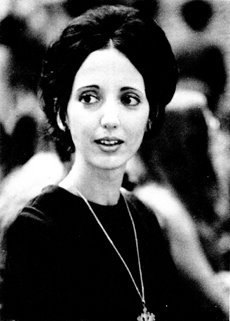 Joyce Carol Oates has written a moving story about the last week of a long mariage. It reminded me a bit of the feelings I had when some years ago my best friend died in front of my eyes although the young body continued to walk on this planet as if nothing had happend.
February 15, 2008. Returning to my car, which I haphazardly parked on a narrow side street near the Princeton Medical Center, I see, thrust beneath a windshield wiper, what appears to be a sheet of stiff paper. At once my heart clenches in dismay—a ticket? A parking ticket? At such a time? Earlier this afternoon, I parked here—hurried, harried, a jangle of admonitions running through my head like shrieking cicadas—on my way to visit my husband in the Telemetry Unit of the medical center, where he was admitted several days ago for pneumonia. Now I need to go home for a few hours, before returning to the medical center in the early evening—anxious, dry-mouthed, and head-aching, yet in a state that might be called hopeful, for since his admission into the medical center Ray has been steadily improving.
Continue Reading
© 2026 Peter Murmann. Powered by ExpressionEngine.


